Why Street Corners Become Places to Pause
Why street corners become places to pause depends on more than spare pavement. Learn how visibility, shelter and street life shape a comfortable stop.
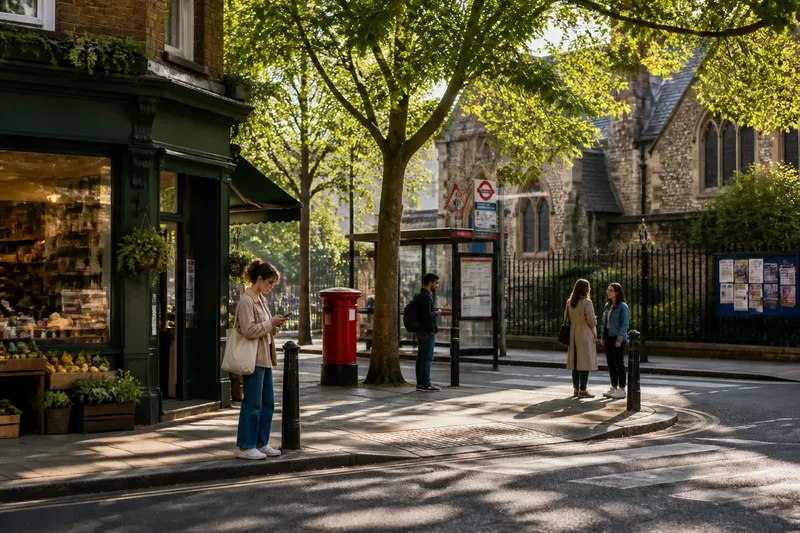
Why street corners become places to pause is easiest to understand at a corner where a shop window catches the light and a bus stop sits just beyond the crossing. Someone checks a message against the street name; another waits for a friend. The corner is doing more than joining two roads: it is helping people decide where they belong for a moment.
A street corner is a little like a coat hook by a door: useful because it gives an everyday action a clear place. But corners also carry the texture of their neighbourhood. A grocer’s frontage, a school gate, a church wall or the entrance to a shared garden can make a junction feel like a familiar meeting point rather than leftover pavement.
Local landmarks give a corner a reason to matter
People often choose a corner because it is easy to describe and recognise. “By the red postbox” is more useful than “somewhere along the road”. A distinctive shopfront, a street tree, a public noticeboard or a view towards a familiar building can make a meeting point legible to residents and visitors alike.
That local character need not come from a grand feature. A bakery window may provide a sheltered place to wait, while a community noticeboard signals that the junction serves more than passing traffic. The important distinction is between a feature that helps people orient themselves and one that merely occupies space.
Look at what people already use as a reference point. If they routinely arrange to meet beside a doorway, the doorway may be doing useful social work, but it still needs to remain accessible. A better cue might be a visible street name, a landmark set back from the route or a clearly positioned seat that does not turn an entrance into a waiting room.
Edges help people feel part of the street
A low wall, a planter or a shopfront can make a pause feel less exposed. These edges tell people where to stand without enclosing them. They can also support casual contact: someone sits while a neighbour stops to chat, or a passer-by pauses to read a community notice.
Not every boundary feels welcoming. High railings can separate people from the street, and a seat placed too close to a doorway may make customers or residents feel watched. A good edge offers a sense of position while leaving clear sightlines and an easy way in and out.
Comfort is social as well as physical. A place can be sheltered from wind yet feel uncomfortable if it is isolated, poorly lit or treated as private by a nearby business. The corner’s character depends on who can use it and whether they can do so without having to justify their presence.
Small rituals turn a junction into a meeting place
Street corners often host brief, repeated acts: neighbours exchange greetings, a parent waits for a child, or someone stops to share a local announcement. These moments are modest, but they make a neighbourhood visible to itself. A corner can become familiar through repetition even when it has no formal seating or civic sign.
That social role changes with the time and the people using the street. A quiet residential junction may be a regular meeting point after work, while a corner near a school may be busy for a short period and calm the rest of the day. A design that suits one group or moment may make another feel pushed aside.
Say a residents’ association wants to make a corner beside its community hall easier to use. The starting point is a bare wall, a narrow entrance and people who already gather there after meetings. They could first agree to keep the doorway clear, then put a temporary noticeboard on the wall and arrange two moveable chairs away from the walking line. If neighbours begin using the chairs to talk and visitors can still enter without weaving around them, the arrangement is serving both a social purpose and access; if the doorway becomes crowded, the chairs should be moved or removed.
Public character depends on care and permission
A corner can feel shared when its upkeep is visible. A clean frontage, a cared-for tree pit or a noticeboard with current information suggests that someone is paying attention. Yet care should not become a reason to claim public space for one group alone. A planter or chair can quietly signal welcome, but it can also narrow access if placed without thought.
Before adding furniture, signs or planting, find out who manages the pavement and what permissions apply. Building owners, local councils and transport authorities may have different responsibilities. Keep entrances, crossings and routes accessible, and seek advice from the responsible authority before changing fixed street equipment or traffic visibility.
Maintenance is part of the design. A noticeboard needs someone to remove outdated material; a planter needs care; loose chairs need a plan for storage. If nobody can look after an addition, a simpler feature—or no feature at all—may serve the neighbourhood better.
What makes a corner feel welcoming?
Why do people choose one corner as a meeting point?
It may be easy to recognise, near a familiar destination or already associated with a shared routine. A useful meeting point is visible and clear without making people wait in a doorway or across a busy route.
Does a street corner need seating to invite a pause?
No: a wall, a sheltered frontage or a clear place to stand may suit brief waits. Seating is more useful when people have a reason to stay longer and it can be provided without narrowing access.
How can a corner feel public rather than privately controlled?
Visible routes, accessible entrances and features that do not demand a purchase help signal that people may stop there. Where ownership or management is unclear, check with the relevant council or property manager before making changes.
What can residents add without changing the street itself?
They might keep a community noticeboard current or organise a small, temporary gathering with permission from the site manager. If an activity attracts people to the pavement, keep the route clear and adjust the arrangement if access becomes difficult.
A good pause point belongs to its neighbourhood
Some corners are best left open for movement. Others become useful meeting places because a landmark, a friendly edge or a repeated local ritual gives people a reason to stop. The point is not to decorate every junction, but to understand what residents already value and make room for it where access and care allow.
Why street corners become places to pause is ultimately a question of recognition and welcome: can someone find the corner, feel comfortable stopping, and share it without displacing others? A modest, well-kept feature can help. So can a clear pavement and a neighbour who knows it is all right to say hello.